
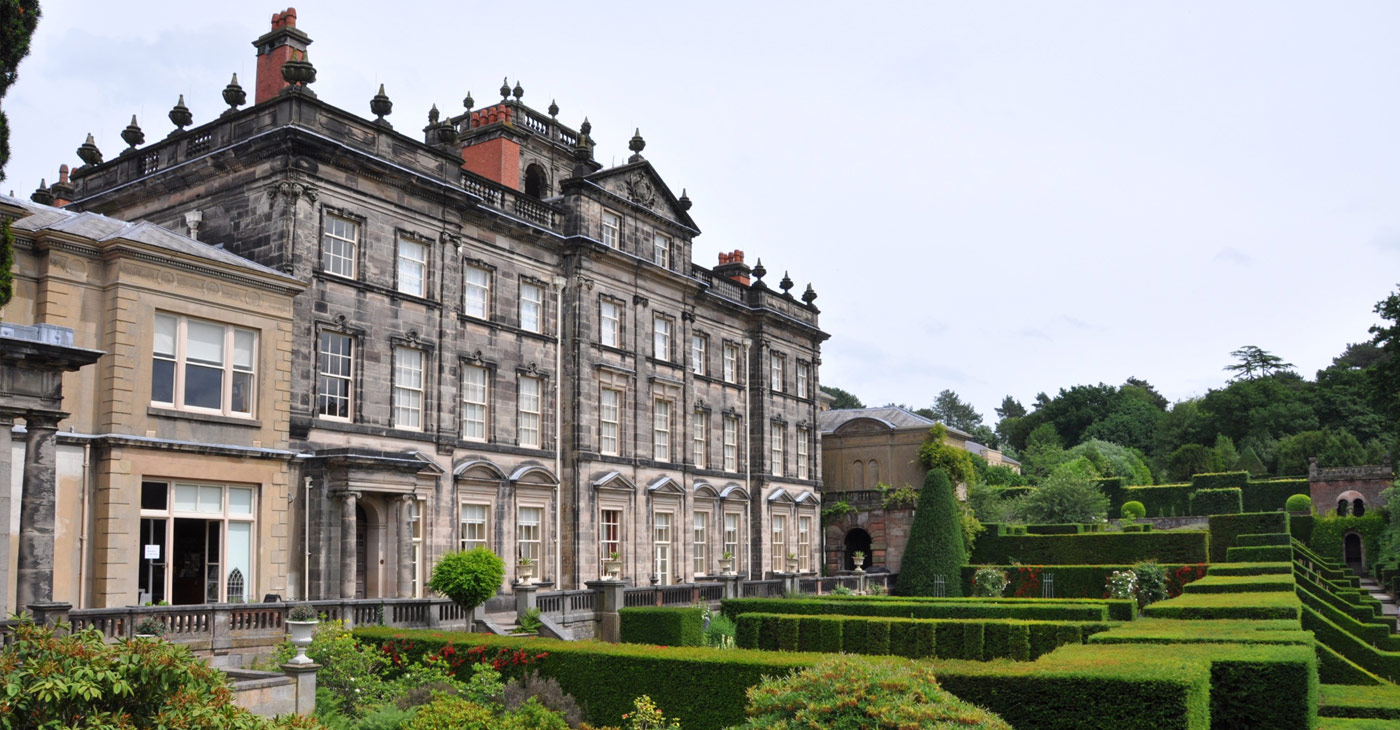
Biddulph Grange is a grand Victorian era manor home with elaborately designed garden located 270km northwest of London on the edge of the Peak District. The 6 hectares of gardens were created in the mid-1800s by James Bateman with help from his friend Edward Cooke and are definitely worth visiting. Bateman was an avid plant collector and filled the gardens with his newly acquired treasures as well unusual sculptures and structures.
There are many distinct garden zones to explore at Biddulph Grange but the first that you’ll see are the parterres which line the front of the house. They’re made from clipped yew and hidden within each section are different plantings so it’s worth exploring each one. Some are a mixture of roses and flowering perennials, some have intricate knot designs and one is filled entirely with beautiful roses.
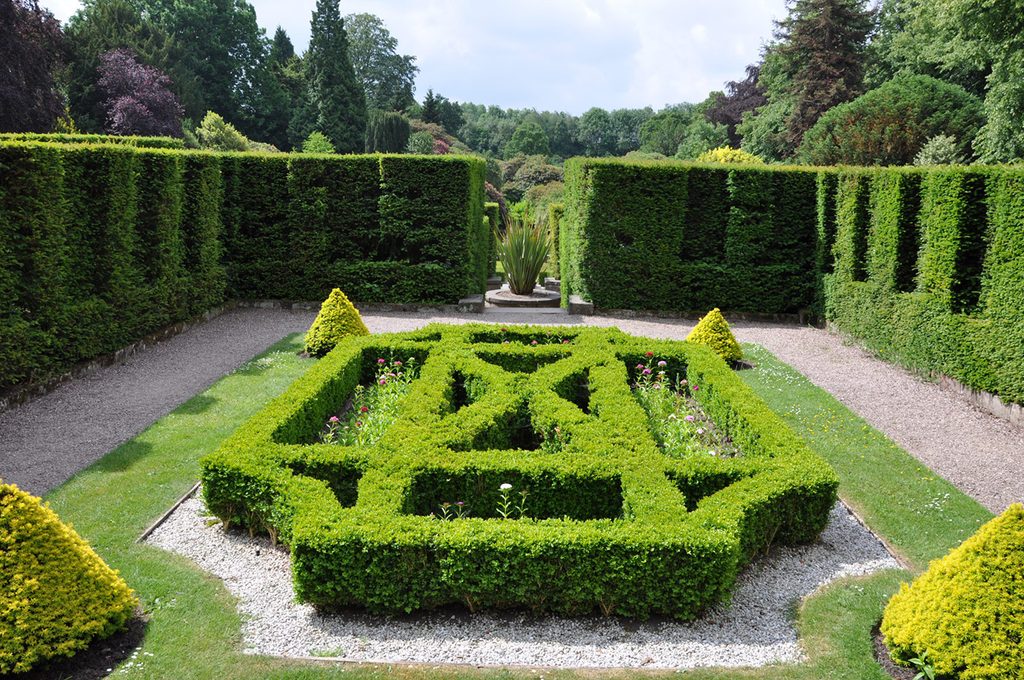
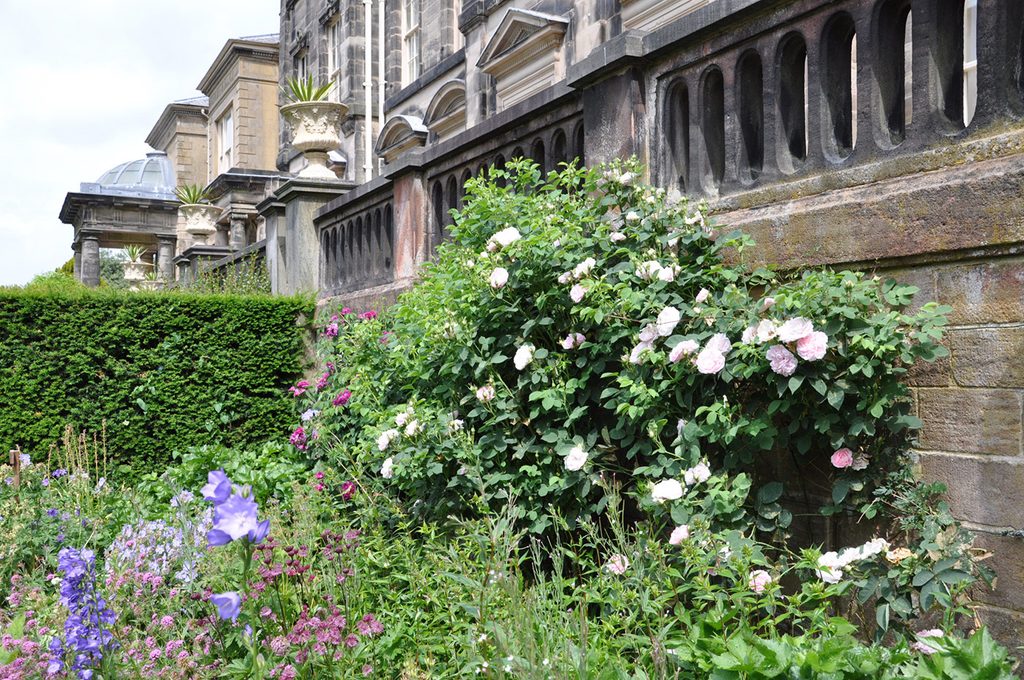
At the edge of the parterres is the cherry orchard garden which features more clipped yew hedges, topiary, stonework and of course cherry trees. The far exit from this garden reveals another design feature of Biddulph Grange – that the different zones are often hidden from each other and accessed via narrow walkways or tunnels which adds intrigue to the whole garden.
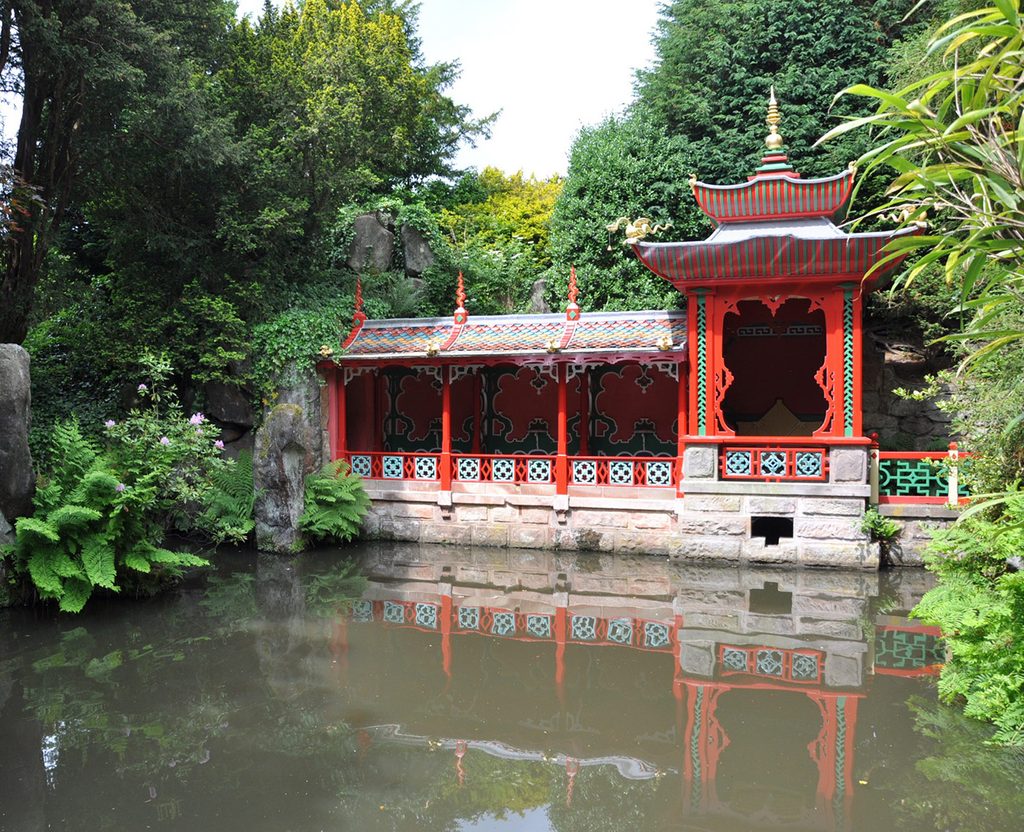
One of the best know zones is the China Garden which features a large pond surrounded by many colourful elements including a bright red pagoda, temple and bridge. It’s a lush, relaxing part of the garden filled with many recognisable plants that in Bateman’s time were extremely exotic.
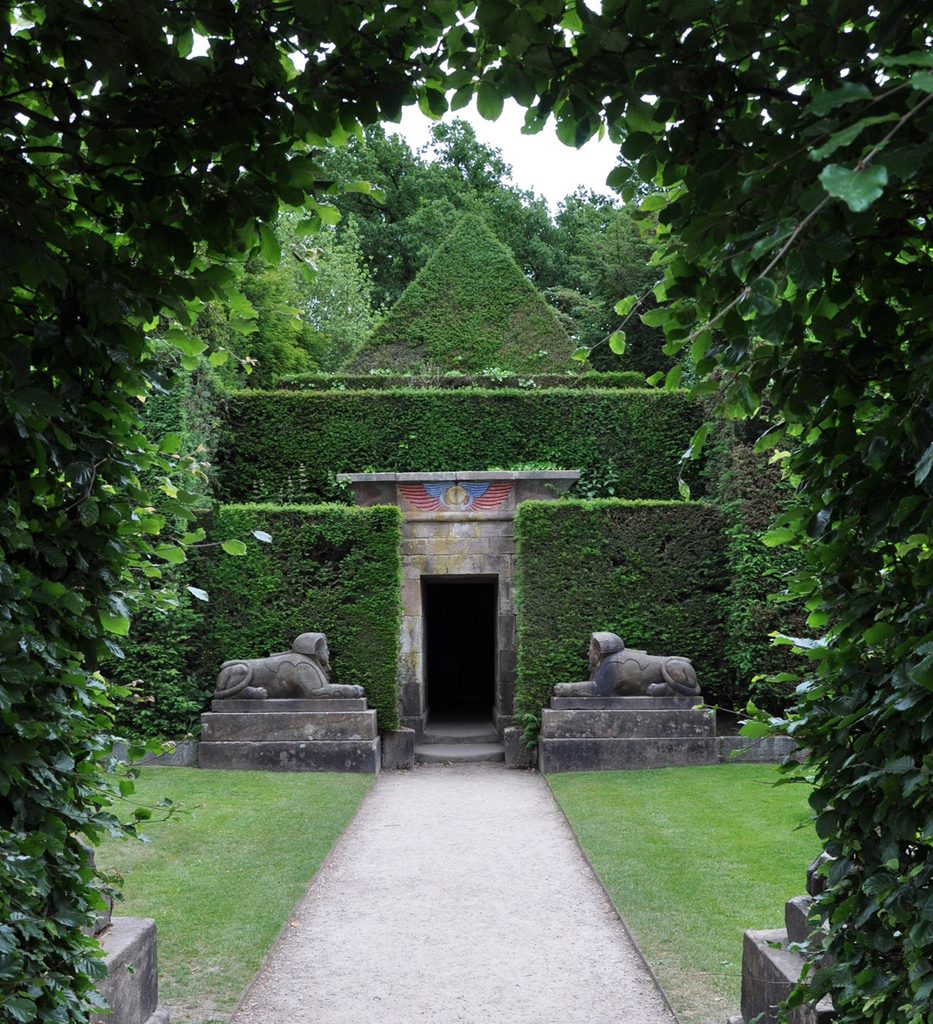
Another well-known area is the Egypt Court with its pair of stone sphinx guarding a mini temple. The garden is finished off with a pyramid made from clipped yew. Victorians were fascinated with all things Egyptian so it’s hardly surprising that Bateman included an Egyptian design at Biddulph Grange.
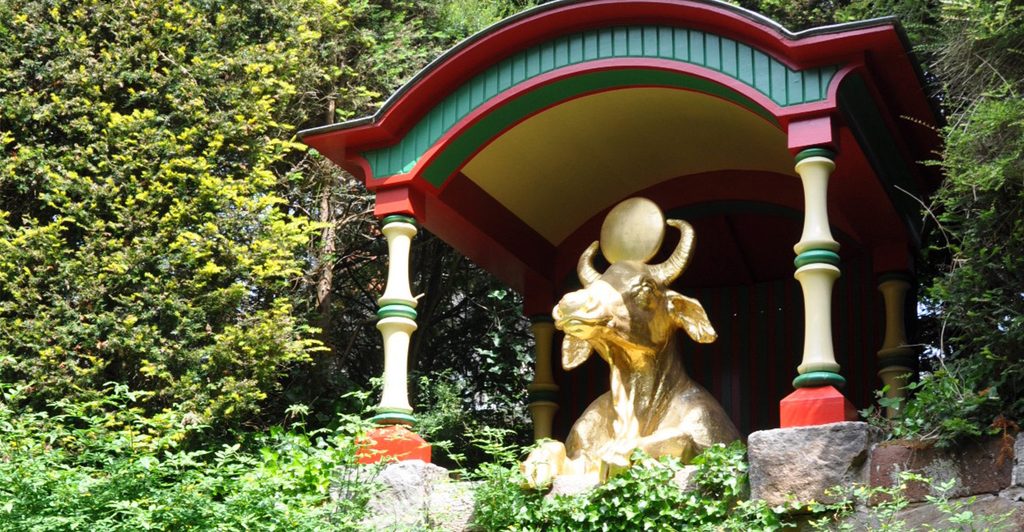
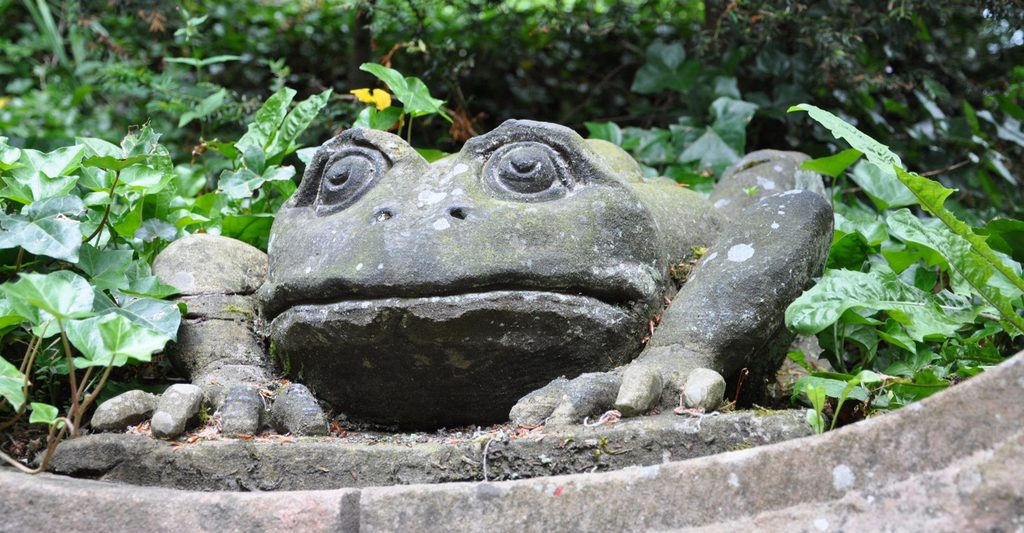
Throughout Biddulph Grange the gardens are filled with interesting and often quirky elements like a large stone frog and a gilded water buffalo which peers over a sunken garden below. These would have surprised and delighted visitors at the time and continue to do so with modern visitors.
In many of the garden zones there are plenty of flowers to be enjoyed like the roses and various plantings of annuals. Biddulph Grange is particularly famous for the dahlia walk which features mass plantings of dahlias on either side of the stone path and surrounded by clipped hedging. When I visited it was early June and they’d only just planted out the dahlias so it was too early to enjoy any of their blooms. Peak blooming time for the dahlias is late summer and early autumn.
Biddulph Grange is owned by the National Trust and you can find more information here https://www.nationaltrust.org.uk/visit/shropshire-staffordshire/biddulph-grange-garden